
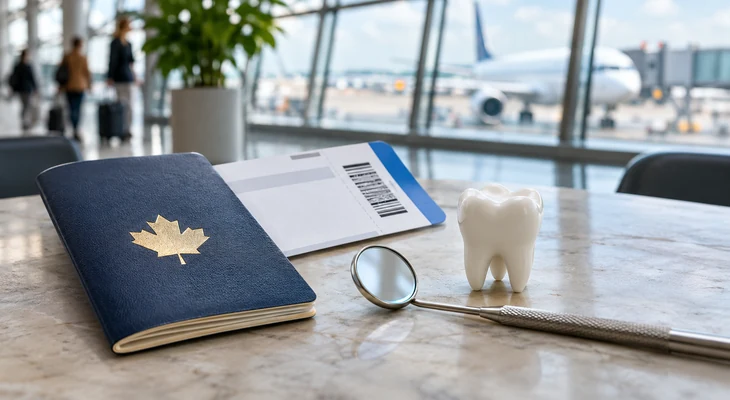
Dental Tourism: What Canadians Should Know Before Getting Teeth Done Abroad
Winter is when many Canadians start booking trips somewhere warm. And for some, the travel plans include more than a beach. Dental tourism, travelling to another country for cheaper dental work, has become a big trend, fuelled by social media videos of dramatic smile makeovers in Turkey, Mexico, Costa Rica and Thailand. The price tags can look tempting. But before you pack your bags and your new-smile wish list, there are some important things you should know.
Key Takeaways
- Dental work abroad can cost less upfront, but complications and follow-up care can erase the savings.
- “Turkey teeth” often involve shaving natural teeth down for crowns, which is permanent and can lead to nerve damage.
- Implants and veneers need time, healing and follow-up visits that are hard to manage from another country.
- Canadian dentists may be limited in how they can fix work done abroad, and costs for repairs are often high.
- If you do go, research the clinic, get a written treatment plan and see your Canadian dentist before and after.
Why Dental Tourism Is So Popular
The main draw is cost. A full set of veneers or crowns in Canada can cost tens of thousands of dollars, and many adults don’t have dental insurance that covers cosmetic work. Clinics abroad advertise packages that include treatment, a hotel and airport pickup for a fraction of the price.
Social media plays a big role too. Before-and-after videos make the process look quick and easy, with a bright new smile in just a few days. What those videos rarely show is what happens months or years later.
What Is “Turkey Teeth”?
The term “Turkey teeth” became popular after many people returned from Turkey with very white, uniform smiles. Many people think they’re getting veneers, thin shells bonded to the front of the teeth. In many cases, though, they actually receive full crowns, which require filing natural teeth down to small stumps.
That’s a big difference. Crowns on healthy teeth remove a lot of natural tooth structure, and that can’t be undone. It can lead to:
- Tooth sensitivity and pain
- Nerve damage that requires root canal treatment
- Gum inflammation if the crowns don’t fit properly
- A lifetime of crown replacements every 10 to 15 years
If you’re interested in a smile makeover, learn how properly placed porcelain veneers work and why they preserve more of your natural tooth.
The Hidden Risks of Getting Dental Work Abroad
Rushed Treatment
Good dentistry takes time. Dental implants usually need several months to fuse with the jawbone before the final tooth is placed. Packages that promise implants and final teeth in a single week may skip important healing steps. Read about the advantages and disadvantages of dental implants to understand what a typical timeline looks like.
Different Standards
In Canada, dentists are licensed by provincial regulatory bodies that set strict rules for training, infection control and materials. Standards vary widely in other countries, and it can be hard to check a clinic’s qualifications or the quality of the materials used.
Infection and Travel Complications
Flying soon after oral surgery can increase swelling and discomfort. Infections may not show up until you’re back home.
Little Recourse If Something Goes Wrong
If you have a problem with the work, it can be difficult to get a refund, a repair or legal help from another country.
Costly Repairs at Home
Canadian dentists regularly see patients with failed implants, ill-fitting crowns and infections from work done abroad. Fixing these problems can cost more than having the work done here in the first place. If an implant fails, our guide on what to do if your dental implant falls out can help.
Questions to Ask Before You Book
If you’re still considering treatment abroad, do your homework. Ask the clinic:
- What are the dentist’s qualifications, and where did they train?
- Are you placing veneers or crowns? How much tooth structure will be removed?
- What brands of implants and materials do you use? Will I get records of them?
- How many visits are needed, and how long between them?
- What warranty do you offer, and how does it work once I’m back in Canada?
- Can you send my X-rays, scans and treatment notes to my dentist at home?
The Government of Canada also has helpful advice on travelling outside Canada to receive medical care, including the importance of travel insurance and checking what your provincial plan will and won’t cover.
Talk to Your Canadian Dentist First
Before you commit, book a consultation with a dentist at home. They can check whether your teeth and gums are healthy enough for major work, explain your options and give you a local price to compare. Many Canadian clinics offer payment plans, phased treatment or less invasive options like whitening and bonding that can give you a great result for less.
Keeping up with regular dental appointments also means you’ll have someone to monitor any work you get, wherever it’s done.
Make an Informed Choice
Dental tourism isn’t always a bad idea, and some patients have good experiences. But cheaper upfront doesn’t always mean cheaper in the long run. The best decision is an informed one, made with a full treatment plan in hand and a dentist at home who can support you.
Want a second opinion before you travel? Find a dentist in your city on Canada Dental Network and get the facts first.
Tags: Dental Implants, Dental Tourism, Turkey Teeth, Veneers