
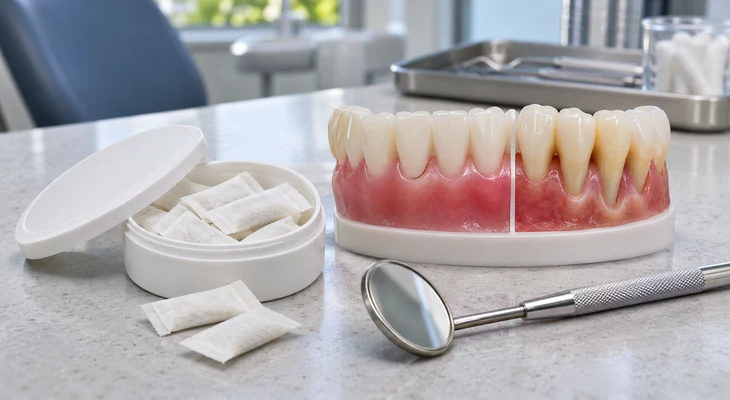
Nicotine Pouches and Your Gums: What Dentists Are Seeing
Small, discreet and smoke-free, nicotine pouches have become a common sight, especially among young adults. Many people see them as a “cleaner” alternative to cigarettes or vaping. There’s no smoke, no smell and nothing to light. But dentists are starting to notice a pattern in patients who use them regularly: sore gums, receding gumlines and changes right where the pouch sits. Here’s what you should know before you tuck another one under your lip.
Key Takeaways
- Nicotine pouches sit against the gums for long periods, which can irritate and damage the tissue.
- Dentists are seeing gum recession, white patches, sensitivity and staining in regular users.
- Nicotine reduces blood flow to the gums, which can hide the early warning signs of gum disease.
- In Canada, nicotine pouches are authorized only to help adults quit smoking and are sold behind the pharmacy counter.
- If you use pouches, tell your dentist and switch spots often while you work on cutting back.
What Are Nicotine Pouches?
Nicotine pouches are small, pre-portioned packets that contain nicotine, flavourings, sweeteners and plant-based fillers. Unlike traditional chewing tobacco or snus, most don’t contain tobacco leaf. You place one between your gum and upper or lower lip, and the nicotine is absorbed through the lining of your mouth over 20 to 60 minutes.
Because they’re easy to use without anyone noticing, they’ve become popular with students, gym-goers and young professionals. Many users go through several pouches a day, which means the same patch of gum can be in contact with nicotine for hours.
Canada’s Rules on Nicotine Pouches
Health Canada has taken a firm stance on these products. In 2024, the federal government moved nicotine pouches behind the pharmacy counter. Under the current rules, pouches can only be sold by pharmacies, flavours are limited, and packaging must carry warnings about nicotine addiction. The goal is to keep them out of the hands of youth.
Health Canada’s public advisory on nicotine pouches makes it clear that authorized pouches are meant only to help adults quit smoking. They aren’t intended for recreational use, for non-smokers or for anyone under 18. Some provinces have pushed for looser rules, but in fall 2026 the federal health minister said Ottawa isn’t considering relaxing them.
Even so, unauthorized products are still sold online and through informal channels, and many of them come in higher strengths and sweet flavours.
What Dentists Are Seeing
Gum Recession
This is the most common concern. When a pouch sits in the same spot day after day, the gum tissue underneath can slowly pull back from the tooth. This exposes the root surface, which is softer than enamel and more likely to decay. Recession doesn’t grow back on its own, and severe cases may need a gum graft.
Irritation and White Patches
Many users develop sore, red or wrinkled patches where the pouch rests. Some people notice white, leathery-looking areas. These often improve when the habit stops, but any patch that doesn’t heal should be checked by a dentist.
Tooth Sensitivity
As gums recede and roots are exposed, teeth can become sensitive to hot, cold and sweet foods. If that sounds familiar, our article on sensitive teeth explains what’s going on.
Staining
Some pouches, especially darker or heavily flavoured ones, can leave yellow or brown marks on the teeth near where they’re placed. Staining is usually surface-level and can often be polished off during a cleaning.
Dry Mouth
Nicotine can reduce saliva flow. Saliva protects your teeth by washing away food and neutralizing acids, so a dry mouth raises your risk of cavities and bad breath.
Why Nicotine Can Hide Gum Disease
Here’s a less obvious risk. Nicotine narrows blood vessels, which reduces blood flow to your gums. Bleeding gums are usually one of the first signs of gum disease, but nicotine users may not bleed as much, even when infection is present. That means gum disease can quietly progress without the usual red flags.
If you use nicotine in any form, regular checkups are even more important. Your dentist can measure the pockets around your teeth and spot bone loss on X-rays before you’d ever notice a problem. Learn more about gingivitis and how to treat it.
Are Pouches Safer Than Smoking?
For an adult smoker who is trying to quit, an authorized pouch used as directed is likely less harmful than cigarettes. That’s why Health Canada allows them as a quit aid. But “less harmful than smoking” isn’t the same as “harmless.” For people who have never smoked, picking up a pouch habit means signing up for nicotine addiction and new risks to the gums.
Tips If You Use Nicotine Pouches
- Tell your dentist. They can check the areas where you place pouches and track any changes.
- Rotate placement. Switching sides reduces constant pressure on one spot, though it doesn’t remove the risk.
- Cut back gradually. Lower the strength and the number you use each day.
- Stay hydrated. Drink water often to fight dry mouth.
- Check your gums. Look for recession, white patches or sores that don’t heal.
- Ask for help quitting. Your doctor, pharmacist or a provincial quit line can support you.
Protect Your Gums Before Damage Builds Up
Nicotine pouches might seem like a low-key habit, but your gums feel the effects. Recession, irritation and hidden gum disease can sneak up on regular users, and some of that damage is permanent. The sooner you talk to a dental professional, the more you can protect.
If you use pouches or are trying to quit, find a dentist near you on Canada Dental Network and book a checkup to see how your gums are holding up.
Tags: Gum Disease, Gum Recession, Nicotine Pouches, Oral Health