
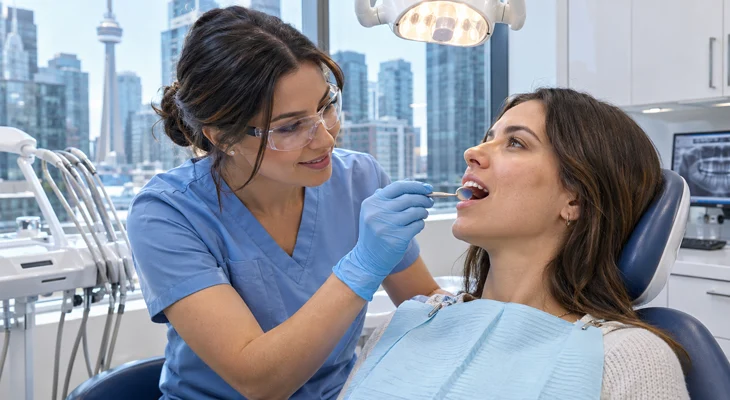
Dental Emergencies in Downtown Toronto: What to Do and Where to Get Fast Care
A cracked molar at dinner. A throbbing toothache that keeps you up at 2 a.m. A hockey puck that sends a front tooth flying. Dental emergencies rarely come with a warning, and when they hit, most people aren’t sure whether to call a dentist, head to the ER, or wait it out until Monday. This guide walks you through what counts as a real dental emergency, what to do in the first hour, and how to get fast care if you live or work in downtown Toronto.
Key Takeaways
- Severe pain, a knocked-out tooth, swelling, uncontrolled bleeding, and signs of infection all call for same-day dental care.
- A knocked-out adult tooth has the best chance of being saved if a dentist sees you within about an hour.
- Most dental emergencies are best handled by a dentist, not a hospital emergency room, unless you have facial swelling that affects breathing or swallowing, a high fever, or a jaw injury.
- Many downtown Toronto clinics offer same-day emergency appointments, so call first before you travel.
- Regular check-ups and a sports mouthguard prevent many emergencies before they start.
What Counts as a Dental Emergency?
Not every dental problem needs to be seen tonight, but some can’t wait. As a rule of thumb, you need urgent care if you’re dealing with pain that over-the-counter medication won’t touch, bleeding that won’t stop, swelling in your face or gums, or a tooth that has been knocked out or badly broken.
Here are the situations dentists see most often:
- Severe toothache: Usually a sign of deep decay, a cracked tooth, or an infected nerve. Pain that wakes you up at night or lingers after hot and cold drinks is worth a same-day visit.
- Broken or cracked tooth: A break can expose the inner layers of the tooth and leave it open to infection or nerve damage.
- Knocked-out tooth: This is the most time-sensitive dental emergency there is.
- Lost filling or crown: Not always painful, but the exposed tooth is fragile and can break or decay quickly.
- Dental abscess: A pocket of infection near the root or gum, often with swelling, a bad taste, or fever. Infections like this can spread, so don’t wait.
- Broken braces or wires: A poking wire can cut your cheek or gums. It’s often less urgent, but still worth a prompt call to your dentist or orthodontist.
What to Do in the First Hour
What you do before you reach the dental chair can make a real difference to the outcome.
If a Tooth Gets Knocked Out
Pick the tooth up by the crown (the white part), not the root. If it’s dirty, rinse it gently with milk or water without scrubbing. If you can, place it back in the socket and bite down softly on a clean cloth. If that isn’t possible, keep it in a small container of milk or tucked inside your cheek, and get to a dentist right away. Baby teeth should not be put back in, but a child should still be seen.
If a Tooth Cracks or Breaks
Rinse your mouth with warm water, save any pieces you can find, and hold a cold compress against your cheek to keep swelling down. Avoid chewing on that side until you’ve been seen.
If You Have a Bad Toothache
Rinse with warm salt water and floss gently around the tooth to remove anything stuck there. An over-the-counter pain reliever can help, but never put aspirin directly on the gum, as it can burn the tissue.
If a Filling or Crown Falls Out
Keep the crown if you have it. A bit of dental cement or sugar-free gum from the pharmacy can cover the spot temporarily, but book an appointment as soon as possible so the tooth can be properly restored.
If You Notice Swelling or a Pimple on Your Gum
That’s often a sign of an abscess. Rinse with salt water and call a dentist the same day. If the swelling spreads to your eye or neck, or you have trouble breathing or swallowing, go to a hospital emergency department immediately.
Dentist or Emergency Room?
Many people head straight to the ER with a dental problem, but most hospitals in Ontario don’t have a dentist on hand. They can manage pain and prescribe antibiotics, but they usually can’t repair a broken tooth, place a filling, or save a knocked-out one. That means you’ll likely still need to see a dentist afterward.
Go to the hospital if you have a jaw injury, heavy bleeding that won’t stop, a high fever, or swelling that affects your breathing or swallowing. For everything else, a dental clinic with same-day emergency appointments is usually the faster and more effective option. If you’re unsure, you can call Health811 to speak with a registered nurse any time of day.
Getting Emergency Dental Care in Downtown Toronto
Living or working downtown has one big advantage in a dental emergency: you usually don’t have to travel far. If you’re near Fort York, Liberty Village, CityPlace, or the waterfront, look for a clinic that offers same-day appointments and can give you guidance over the phone while you’re on your way.
For example, Fort York Dentist offers emergency dental care in downtown Toronto for toothaches, broken and knocked-out teeth, lost fillings and crowns, abscesses, and broken braces. Their team assesses your situation when you call, tells you how to manage the problem until you arrive, and then focuses on getting you out of pain and treating the cause.
A few tips when calling any clinic in an emergency:
- Describe your symptoms clearly, including when they started and how severe the pain is.
- Mention any swelling, fever, or bleeding.
- Have your dental insurance details or plan information ready.
- Ask whether they can see you the same day and what you should do in the meantime.
Paying for Emergency Dental Care in Canada
Cost is a common worry, especially when the visit is unplanned. Many workplace dental plans cover emergency exams and treatments such as fillings and extractions. If you don’t have private insurance, you may be eligible for the Canadian Dental Care Plan (CDCP), which helps eligible Canadians cover a range of dental services. It’s worth asking the clinic whether they accept CDCP patients when you call.
How to Prevent Dental Emergencies
You can’t avoid every accident, but a few simple habits lower your risk considerably:
- Brush twice a day and floss daily to prevent the decay and infections that lead to sudden pain.
- Wear a mouthguard for hockey, basketball, martial arts, and other contact sports.
- Don’t chew ice, pens, or hard candy, and never use your teeth to open packages.
- Keep up with regular check-ups so small problems are caught before they turn into emergencies.
- Follow your dentist’s aftercare advice after procedures. If you’ve recently had a tooth pulled, our guide to aftercare for tooth extraction covers what to watch for.
Don’t Wait When It Hurts
Dental pain is your body telling you something is wrong, and waiting rarely makes it better. Acting quickly can save a tooth, stop an infection from spreading, and spare you a more complex and costly treatment later. If you’re in downtown Toronto and facing a dental emergency, call a clinic that offers same-day care and get the help you need today.
Tags: Dental Emergencies, Emergency Dentist Toronto, Fort York Dentist