
Movember and Your Mouth: HPV, Oral Cancer and Why Men Should Get Screened
Every November, moustaches start popping up across Canada in support of men’s health. Most of the Movember conversation focuses on prostate cancer, testicular cancer and mental health. But there is another cancer that deserves a spot on that list, and it often shows up first in the mouth and throat. HPV-related oral cancer is becoming more common in men, and many of them have never smoked a day in their lives. The good news? A quick screening at the dentist can help catch problems early, when treatment works best.
Key Takeaways
- HPV (human papillomavirus) is now a leading cause of cancers at the back of the throat, including the tonsils and base of the tongue.
- Men are diagnosed with HPV-related throat cancers several times more often than women.
- Early signs are easy to miss: a sore throat that won’t go away, a lump in the neck, or trouble swallowing.
- Your dentist checks for signs of oral cancer at regular checkups, and the exam takes only a few minutes.
- The HPV vaccine, quitting tobacco and cutting back on alcohol all lower your risk.
What Is HPV and How Is It Linked to Oral Cancer?
HPV is a very common virus. Most sexually active adults will have it at some point, and in most cases the body clears it on its own without any symptoms. The problem is that certain high-risk types of HPV, especially HPV-16, can stick around and slowly cause changes in cells that lead to cancer.
When most people think of HPV, they think of cervical cancer. But HPV can also infect the cells at the back of the throat, an area called the oropharynx. This includes the tonsils, the base of the tongue and the soft palate. Cancers in this area are known as oropharyngeal cancers, and HPV is now responsible for a large share of them.
The Canadian Cancer Society has raised the alarm about the sharp rise in HPV-related mouth and throat cancers among Canadian men over the past few decades.
Why Men Are at Higher Risk
Researchers are still working out exactly why men are hit harder, but a few factors seem to play a role:
- Immune response: Women may build a stronger immune response after their first HPV exposure, which helps protect them later.
- Vaccination gaps: Many Canadian provinces only started offering the HPV vaccine to boys in school programs years after girls. A lot of adult men today were never offered it.
- Tobacco and alcohol: Smoking and heavy drinking raise the risk of all oral cancers, and they can make HPV-related changes more likely to turn harmful.
HPV-related throat cancers also tend to show up in a younger group than traditional mouth cancers.
Warning Signs You Shouldn’t Ignore
One of the trickiest parts of HPV-related throat cancer is that it can be quiet in the early stages. Because it often starts deep in the tonsils or the base of the tongue, you can’t always see it in the mirror. Book an appointment with your dentist or doctor if you notice any of these for more than two or three weeks:
- A sore throat or hoarse voice that doesn’t go away
- A painless lump in the neck
- Pain or difficulty when swallowing
- Ear pain on one side only
- A mouth sore or ulcer that won’t heal
- White or red patches on the gums, tongue or inside of the cheeks
- Numbness in the mouth or lips
- Unexplained bleeding in the mouth
How Oral Cancer Screening Works at the Dentist
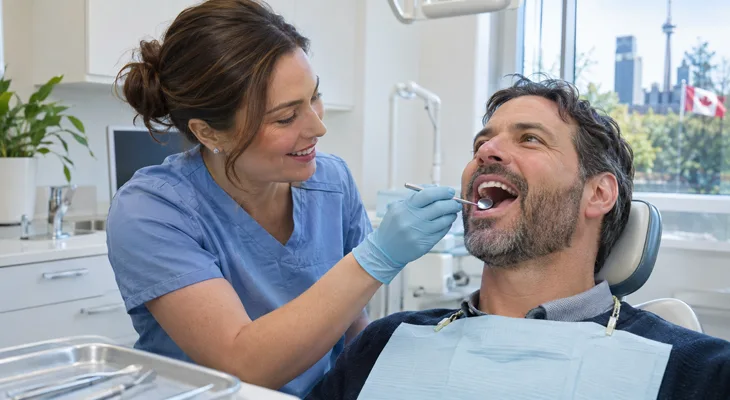
Canada doesn’t have a formal, organized screening program for oral cancer like it does for breast or colon cancer. That makes your regular dental visit one of the best chances for early detection. During a routine checkup, your dentist or hygienist will:
- Look closely at your lips, gums, tongue, cheeks, the roof and floor of your mouth, and the back of your throat
- Gently feel your jaw, neck and under your chin for lumps or swelling
- Ask about any changes you’ve noticed, along with your smoking and drinking habits
The whole exam usually takes just a few minutes and is completely painless. If something looks unusual, your dentist may suggest a follow-up visit in a couple of weeks or refer you to a specialist for a closer look. This is one more reason why regular dental appointments matter, even when your teeth feel fine.
How to Lower Your Risk
Get the HPV Vaccine
The HPV vaccine protects against the high-risk types of the virus that cause most HPV-related cancers. In Canada, it’s offered free to students through school-based programs in every province and territory. Adults who missed it may still benefit, so ask your doctor or pharmacist whether it makes sense for you. You can learn more about the virus on the Government of Canada’s HPV page.
Quit Tobacco
Smoking, chewing tobacco and other tobacco products are major causes of oral cancer on their own. Combined with HPV, the risk climbs even higher. If you need another reason to quit, read our article on mouth cancer and cigarette smoking.
Limit Alcohol
Heavy drinking irritates the tissues in your mouth and throat and raises your cancer risk, especially when paired with smoking.
Do a Quick Self-Check
Once a month, take a look inside your mouth with a flashlight and a mirror. Check your gums, tongue and cheeks, and feel your neck for lumps. Knowing what’s normal for you makes it easier to spot changes.
Make Your Mouth Part of Movember
Movember is all about men taking their health seriously and starting conversations they might normally avoid. Adding an oral cancer screening to that list is one of the easiest things you can do. It’s quick, it’s painless, and it’s already part of a standard dental checkup.
If it’s been more than a year since your last visit, now is a great time to book. Encourage the men in your life to do the same.
Ready to book a checkup? Find a dentist in your city on Canada Dental Network and make this Movember the one where you looked after your whole health, mouth included.
Tags: HPV, Men's Health, Movember, Oral Cancer