
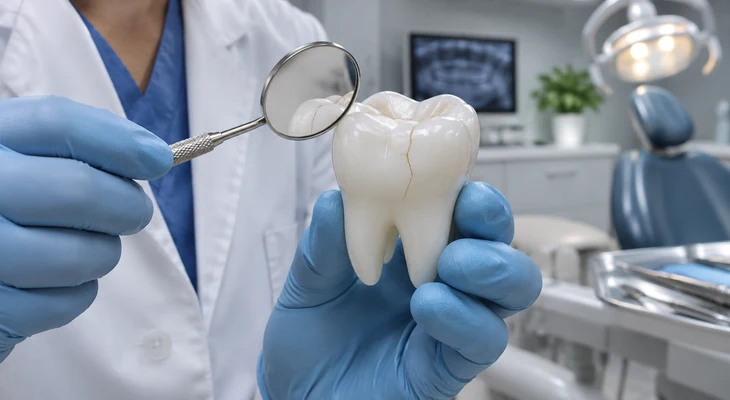
Cracked Teeth: Why More Adults Are Breaking Their Teeth (and How to Prevent It)
You bite into a sandwich and feel a sudden, sharp zing in a back tooth. Then nothing. A few days later, it happens again. If that sounds familiar, you might have a cracked tooth. Dentists across Canada say they’re seeing more of them than ever, and the main culprits aren’t hockey pucks or popcorn kernels. They’re stress, clenching and grinding. The good news is that cracked teeth can often be treated, and many can be prevented altogether.
Key Takeaways
- Dentists are reporting more cracked teeth in adults, often linked to stress-related clenching and grinding.
- Common signs include sharp pain when biting, especially when you release, and sensitivity to cold.
- Cracks don’t heal on their own, and early treatment gives you the best chance of saving the tooth.
- A custom night guard is one of the best ways to protect your teeth from grinding damage.
- Avoiding hard foods and using teeth as tools also lowers your risk.
Why Are More Adults Cracking Their Teeth?
Dentists started noticing a jump in cracked teeth during the pandemic, and the trend hasn’t really slowed down. Here’s why:
- Stress: Work pressure, money worries and busy schedules lead many people to clench their jaws, often without realizing it.
- Grinding at night: Known as bruxism, nighttime grinding can put several times more force on your teeth than normal chewing.
- Poor posture: Hunching over laptops and phones can strain the jaw and neck muscles and contribute to clenching.
- Aging teeth: As we get older, teeth go through decades of wear. Large old fillings can also weaken the tooth around them.
- Hard foods and habits: Ice, hard candies, popcorn kernels, pen chewing and opening packages with your teeth all add up.
Signs You Might Have a Cracked Tooth
Cracked teeth can be tricky because they don’t always show up on X-rays, and the pain often comes and goes. Watch for:
- Sharp pain when biting down, especially when you release the bite
- Sensitivity to hot, cold or sweet foods
- Pain that comes and goes rather than a constant ache
- Swelling of the gum around one tooth
- A rough edge you can feel with your tongue
Sometimes a cracked tooth is the reason a tooth hurts even when there’s no cavity. Our article on why your tooth aches without a cavity explains other possible causes.
Types of Tooth Cracks
Craze Lines
These are tiny, shallow lines in the outer enamel. They’re very common in adults, usually painless and often don’t need treatment.
Fractured Cusp
A piece of the chewing surface breaks off, often around a filling. It’s usually not very painful and can be repaired with a filling or crown.
Cracked Tooth
A crack runs from the chewing surface down toward the root. If caught early, a crown can often hold the tooth together. If it reaches the nerve, a root canal may be needed.
Split Tooth
This happens when a cracked tooth is left untreated and splits into separate pieces. Some of the tooth may be saved, but often it needs to be removed.
Vertical Root Fracture
This crack starts in the root and works its way up. It may cause few symptoms until infection sets in, and the tooth often needs to be extracted.
How Cracked Teeth Are Treated
Treatment depends on the size and location of the crack:
- Bonding: Tooth-coloured resin can fill and seal small cracks.
- Crown: A cap covers and protects the tooth, holding it together.
- Root canal: If the crack has reached the nerve, a root canal removes the damaged tissue before a crown is placed.
- Extraction: If the tooth can’t be saved, your dentist may remove it and discuss replacement options like an implant or bridge.
Cracks tend to grow over time, so the earlier you get help, the more likely your tooth can be saved. If a tooth breaks suddenly or you have severe pain, treat it as a dental emergency.
How Night Guards Help
If you grind or clench, a night guard is one of the most effective ways to protect your teeth. It’s a thin, removable appliance that fits over your teeth while you sleep. Instead of your teeth taking the force, the guard does.
You may grind your teeth if you wake up with a sore jaw, headaches or tired facial muscles, or if your partner hears grinding at night. Your dentist may also spot flattened or chipped teeth during a checkup.
Custom vs Store-Bought Guards
Over-the-counter guards are cheaper, but they’re often bulky and may not fit well. A custom night guard from your dentist is made from moulds or scans of your teeth, so it’s more comfortable, lasts longer and protects better. Many dental insurance plans cover part of the cost.
More Ways to Prevent Cracked Teeth
- Don’t chew ice, hard candy or popcorn kernels.
- Stop using your teeth to open bottles or packages.
- Wear a mouthguard for contact sports like hockey.
- Notice daytime clenching and keep your teeth slightly apart when relaxed.
- Manage stress with exercise, good sleep and breaks from screens.
- Visit your dentist regularly so small cracks are caught early.
Protect Your Teeth Before They Crack
Cracked teeth are becoming more common, but they aren’t inevitable. Knowing the signs, managing stress and wearing a night guard if you grind can make a big difference.
If you feel pain when you bite or think you might be grinding, find a dentist in your city on Canada Dental Network and get it checked before a small crack becomes a big problem.
Tags: Bruxism, Cracked Tooth, Night Guard, Teeth Grinding