
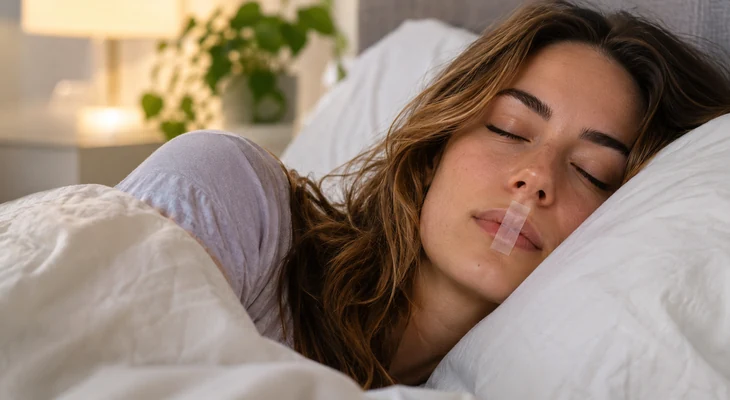
Mouth Taping for Sleep: Is the TikTok Trend Safe for Your Teeth?
Scroll through TikTok or Instagram for a few minutes and you’ll probably see someone putting a strip of tape over their lips before bed. Fans of mouth taping say it helps them breathe through their nose, sleep more deeply, stop snoring and even wake up with fresher breath. It sounds simple, but is it actually safe, and what does it mean for your teeth? Here’s what dental and sleep experts want you to know before you try it.
Key Takeaways
- Mouth taping aims to stop mouth breathing at night, but there’s limited scientific evidence that it improves sleep.
- Mouth breathing really can harm your teeth by causing dry mouth, cavities, gum irritation and bad breath.
- Taping can be risky if you have a blocked nose, allergies or undiagnosed sleep apnea.
- Loud snoring, gasping or daytime exhaustion are signs to see a doctor, not reach for tape.
- Your dentist can spot signs of mouth breathing and help you find the cause.
What Is Mouth Taping?
Mouth taping means placing a small piece of tape, usually a gentle medical or specially made strip, over your lips before you go to sleep. The idea is to keep your mouth closed so you breathe through your nose all night.
Nose breathing has real benefits. Your nose filters, warms and moistens the air you breathe. It also helps keep your mouth moist, which protects your teeth and gums. So the goal behind the trend makes sense. The question is whether tape is the right way to get there.
Why Mouth Breathing Is Bad for Your Teeth
Many people breathe through their mouths at night without realizing it. Clues include waking up with a dry mouth, a sore throat, chapped lips or drool on your pillow. Over time, mouth breathing can cause:
- Dry mouth: Saliva is your mouth’s natural defence. It washes away food, neutralizes acids and helps repair early enamel damage. When it dries up overnight, bacteria have free rein.
- More cavities: Less saliva means acids linger on your teeth for hours, raising your risk of decay.
- Gum inflammation: Dry gums, especially around the front teeth, can become red, puffy and prone to bleeding.
- Bad breath: A dry mouth is a breeding ground for odour-causing bacteria.
- Changes in children: In kids, long-term mouth breathing can affect how the jaw and face develop and may lead to crowded teeth.
Mouth breathing is one of several everyday habits that quietly wear down your smile. See our list of habits that degrade your teeth for others to watch out for.
Does Mouth Taping Actually Work?
Despite all the buzz, the research is thin. Most studies on mouth taping are small, short and not well controlled. Recent reviews of the evidence have found little proof that taping improves sleep quality for most people, and some researchers have raised concerns about safety.
Some people with mild snoring do report feeling better. But feeling better isn’t the same as being treated, and that’s where the risk comes in.
When Mouth Taping Can Be Risky
A Blocked Nose
If your nose is congested from a cold, allergies, a deviated septum or enlarged adenoids, you may not be able to get enough air through it. Taping your mouth shut in that situation can make breathing harder and leave you waking up gasping.
Hidden Sleep Apnea
This is the biggest concern. Obstructive sleep apnea happens when your airway repeatedly collapses during sleep, causing pauses in breathing. It’s linked to high blood pressure, heart disease, stroke and diabetes. Many people with sleep apnea don’t know they have it. Taping can quiet the snoring and make you feel like the problem is solved, while the real issue goes untreated.
Skin Irritation
Adhesives can irritate the skin around your lips, especially with nightly use.
Children
Mouth taping isn’t recommended for children. If your child breathes through their mouth or snores, talk to your family doctor or dentist instead.
When Snoring Points to Sleep Apnea
Snoring now and then is normal. But it may be a sign of sleep apnea if you notice:
- Loud, frequent snoring most nights
- Choking, gasping or pauses in breathing that a partner notices
- Waking up with headaches or a dry mouth
- Feeling exhausted during the day, even after a full night in bed
- Trouble focusing, irritability or falling asleep while driving
- Grinding your teeth at night
The Government of Canada’s sleep apnea page explains the risk factors and treatment options. If any of these signs sound familiar, ask your doctor about a sleep study before trying mouth tape.
How Your Dentist Can Help
Your dentist often sees the signs of mouth breathing and sleep problems before you do. Dry tissues, gum inflammation along the front teeth, worn-down teeth from grinding and a narrow airway can all show up during a regular checkup. That’s another good reason to keep up with your regular dental appointments.
Depending on what they find, your dentist may:
- Recommend products for dry mouth, such as saliva substitutes or fluoride rinses
- Suggest you see a doctor about nasal blockages or a sleep study
- Fit you with a custom oral appliance that moves the jaw forward to keep the airway open, a proven treatment for mild to moderate sleep apnea
- Make a night guard if you grind your teeth
The Bottom Line
Mouth taping is trying to fix a real problem, since mouth breathing is bad for your teeth and gums. But tape isn’t a proven fix, and it can hide serious issues like sleep apnea. Find out why you breathe through your mouth first, then treat the cause.
If you often wake up with a dry mouth or your partner complains about your snoring, find a dentist in your city through Canada Dental Network and bring it up at your next visit.
Tags: Dry Mouth, Mouth Breathing, Mouth Taping, Sleep Apnea